Publications
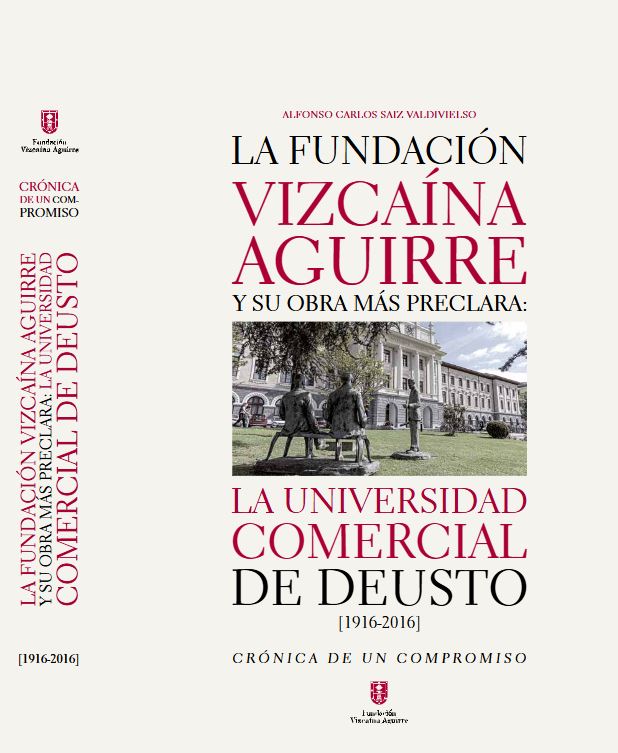
The Aguirre Viscayan Foundation and its most illustrious work: Deusto Business School 1916 - 2016
The Aguirre Vizcayan Foundation celebrated its hundredth anniversary in 2016, as did La Comercial, as Deusto Business School was known. To mark to occasion, the foundation has published a book chronicling the events that have taken place over both institutions’ 100-year history. It features a wealth of facts and shares the views of former students as well as the founders… a book that provides an insight into this great project, which was established in 1916.
In celebrating both anniversaries, the institutions have sought to leave a written record of their joint legacy, the history of which they have a duty to make known.
The Board of Trustees believes that the best way to preserve the foundation’s legacy, and indeed its history, is to honour their forebears by portraying their concerns and efforts in this book. It provides a full account of the Aguirre Viscayan Foundation’s commitment to the Deusto Business School.
The book was written by Alfonso Carlos Saiz Valdivielso.
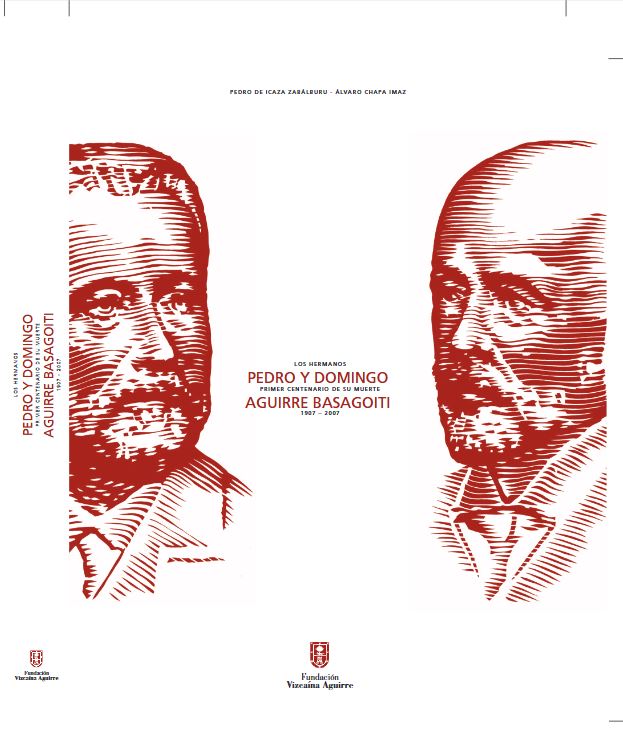
A book about the Aguirre brothers, marking the centenary of their deaths
2007 marked a hundred years since the deaths of brothers Pedro and Domingo de Aguirre Basagoiti. Through this publication, the Aguirre Viscayan Foundation aims to preserve their memory by revealing, through their family correspondence, the most intimate and human aspects of their lives.
In 1907, within the space of just four months, the two brothers died in Bilbao, after spending most of their lives working hard in the distant city of Tepic (Nayarit, Mexico).
The book reveals details about family events with their parents, sisters and nephews, as well as their hopes and concerns for the future.
It also unites news from Casa Aguirre, the collective name by which the successive companies that ran the Tepic-based businesses were known.
Deusto Business School: its fundamental purpose
Through industrialisation, the frequency and spread of transport links, and the proliferation of banking, credit and welfare institutions over the past century, economic relations have developed to such a point that we are all obliged to play a part in them, whether actively or passively.
These relations now form the strongest fabric binding people together all over the world. The state holding the most threads in this fabric will be the most powerful, and the one whose influence is felt most strongly both in the political sphere and in the prevalence of philosophical, artistic and social ideas.
Within this vibrant international economic movement, there is no doubt that Spain is set to have an extremely well-developed commercial sector. This is by virtue of its geographical position, situated between old Europe, America, brimming with life and enormous growth, and Africa, whose entry into civilisation through the exploitation of its immense riches is now a matter of short order.
The Spanish language, so widespread that there is no trading nation that does not learn it, opens the doors to the Americas, Morocco and much of Turkey and the Balkan countries. Spain’s prosperity therefore depends on its economic development; and the country’s spiritual bond with the American nations must find its foundation in these economic relations, just as they must serve as channels to keep the currents of Hispano-American civilisation alive.
These reasons, and a thousand others that might be cited in this vein, were foreseen by the practical talents of Pedro and Domingo G. de Aguirre. Through their diligence and modesty, they combined a practical sense of reality, impeccable integrity and a proven love for the province of Vizcaya where they were born.
For this reason, as Pedro de Aguirre gave shape to their shared vision, he entrusted his nephew, Pedro de Icaza y Aguirre, with the task of carrying out their plan to found a business university; and it is this university that has given rise to the AGUIRRE VIZCAYAN FOUNDATION, established with the assets bequeathed for that purpose, under the patronage of Pedro de Icaza.
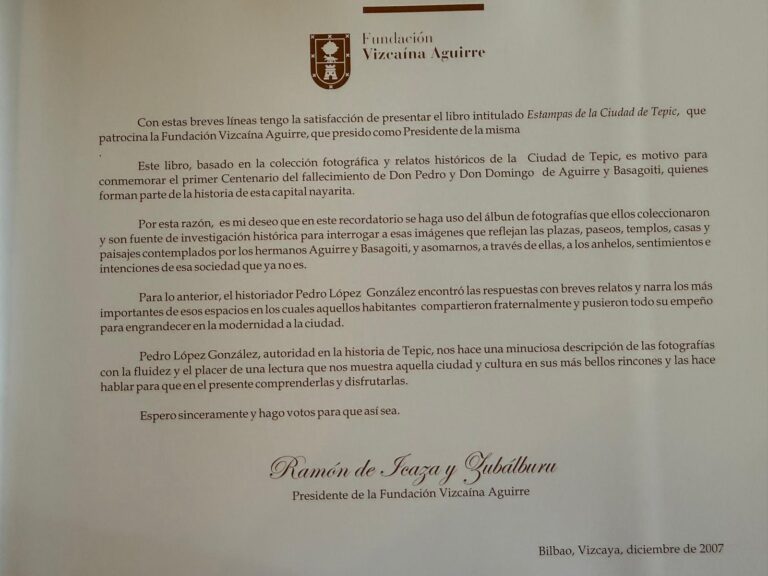
Book: Estampas de la Ciudad de Tepic
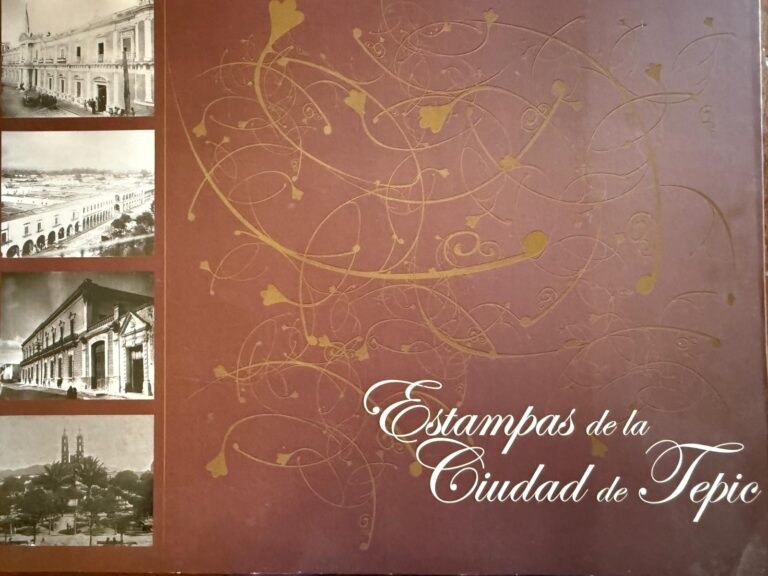
The Aguirre Viscayan Foundation sponsored the book Estampas de la Ciudad de Tepic (Scenes from the City of Tepic), based on a collection of photographs and historical accounts of the city of Tepic. The book serves to commemorate the centenary of the deaths of Pedro and Domingo de Aguirre y Basagoiti, who played a part in developing Tepic, capital of the state of Nayarit, Mexico.
The book launch, organised by its author Pedro López González, was held on 30 January 2008 at Casa Aguirre, in the city of Tepic, Nayarit. In addition to González, the event was attended by Manuel Salinas Solís and Abel Gómez Gutiérrez, both professors at the Autonomous University of Nayarit.
In the book, Pedro López González provides a detailed description of the photographs depicting the city and its culture, highlighting its most notable features.
Books: 1897 and Leonardo da Vinci, el ingeniero (Leonardo da Vinci, The Engineer)
The Aguirre Viscayan Foundation sponsored the book commemorating the centenary of the School of Industrial and Telecommunications Engineering, which forms part of the Universiity of the Basque Country.
Following the publication of the founding decree of the School of Engineering and the establishment of its Board of Trustees on 31 December 1901, Pedro de Icaza y Aguirre, a civil engineer, took up the post of Secretary. He also held the position of Trustee on the relevant Board of Trustees, which was chaired by Enrique de Aresti, President of the Provincial Council of Vizcaya, and which included such illustrious figures from the history of our town as Eduardo Victoria de Lecea, Federico Echevarría, Evaristo de Churruca, Ernesto Hoffmeyer, Guillermo Pradera and Jesús Arístegui.
It was through this family connection that Pedro de Icaza, a member and Secretary of the first Board of Trustees of the Bilbao School of Industrial Engineers and founder of the Aguirre Viscayan Foundation, as well as its first and solo trustee, was inspired to take part in the school’s centenary celebrations by sponsoring this book.
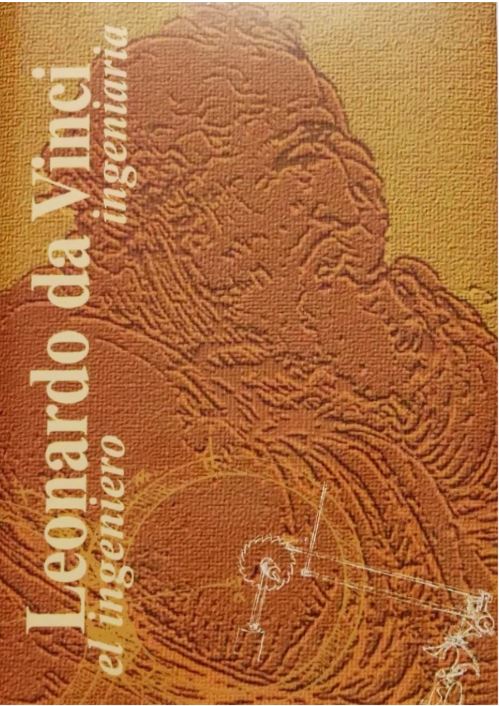
This book is dedicated to one of Leonardo da Vinci’s lesser-known interests, inviting readers to discover his scientific and technical thinking. This meticulously produced publication was sponsored by the Aguirre Viscayan Foundation to mark the centenary of the Bilbao School of Industrial Engineers. 1997
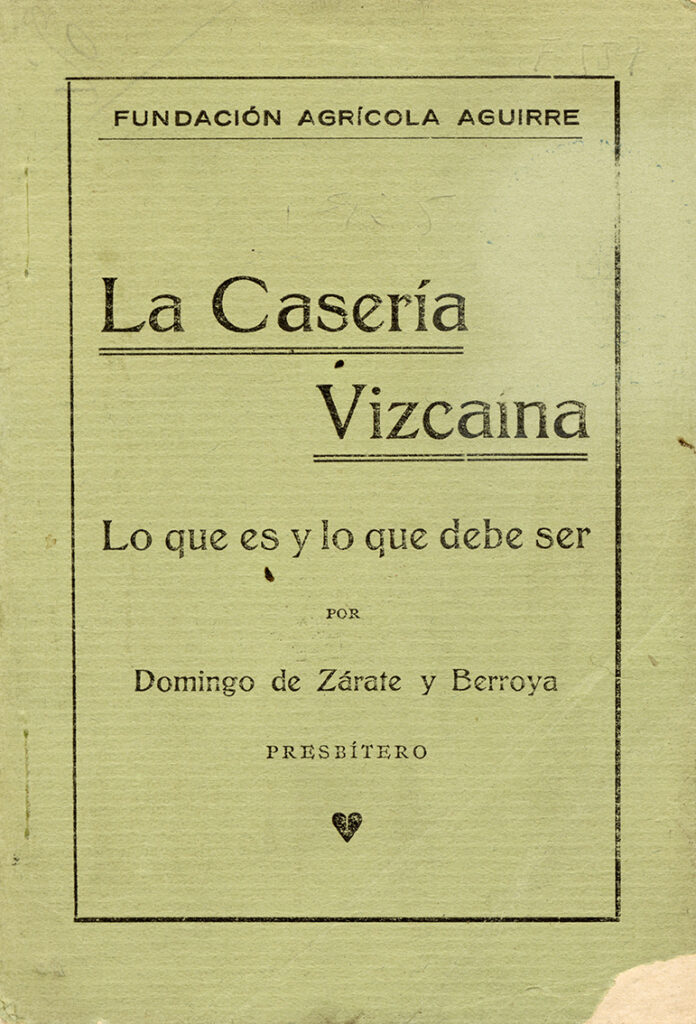
La Casería Vizcaína. Lo que es y lo que debe ser (The Vizcayan Farmstead: What It Is and What It Should Be) (1923)
A work by Domingo de Zárate y Berroya, published by the Aguirre Agricultural Foundation to promote improvements in agriculture and highlight the value of the traditional Vizcayan farmstead model. It is one of the first publications produced by the foundation as part of its work to disseminate agricultural knowledge.
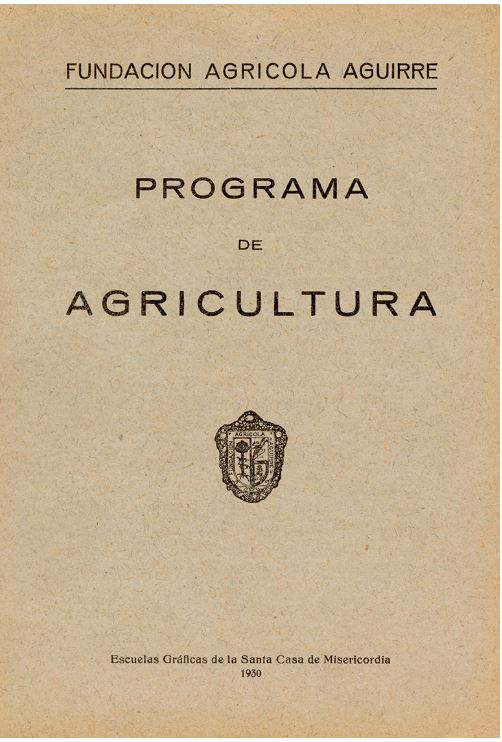
Programa de Agricultura (Agricultural Programme) (1930)
A publication edited by the Aguirre Agricultural Foundation aimed at disseminating practical knowledge and promoting the modernisation of agriculture in Vizcaya. This is in line with the foundation’s founding aims of fostering education and agricultural progress in rural communities.
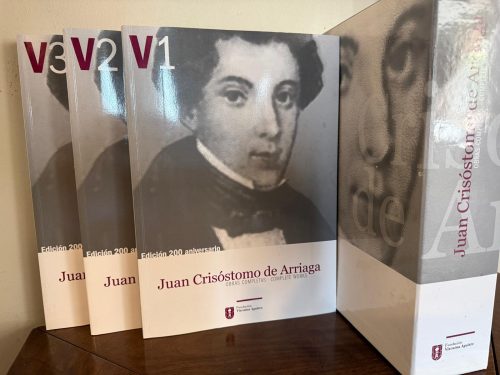
The complete works of Juan Crisóstomo de Arriaga on his 200-year anniversary
On the centenary of the deaths of the brothers Pedro and Domingo de Aguirre y Basagoiti, the Aguirre Viscayan Foundation wished to pay tribute to the illustrious Vizcayan composer, Juan Crisóstomo de Arriaga, by publishing his complete works in three volumes and launching a website: arriagaobrascompletas.fundacionvizcainaaguirre.org
They considered that publishing the complete works of Juan Crisóstomo de Arriaga and distributing them free of charge to the world’s leading orchestras, conservatoires, music schools and libraries in Spain and abroad, would help to deepen understanding of his work and promote its wider dissemination.